28 Aug 2026
I observed last night's partial lunar eclipse and set an alarm for the time of the moon's transit. But unfortunately I set the alarm for 12:40 pm instead of am. I'll try to get its postion toniight, though, using the transit quadrant.
I did mark the analemma, however, and was pleased to see that the error was small (0.13° declination, and 0.02 hr. Right Ascension). I was a bit worried that the stump had shifted a bit because of rotting, but it looks like it's doing ok.
30 May 2026
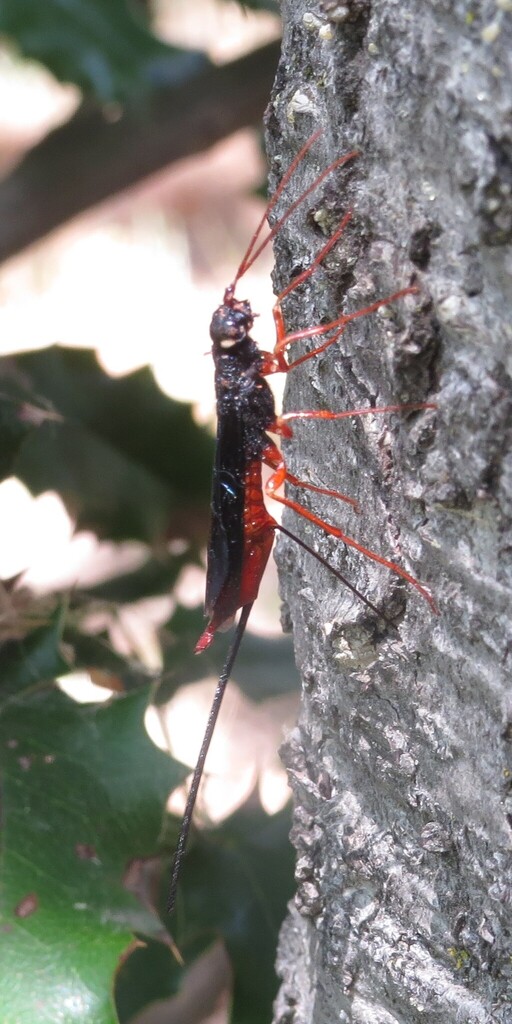
In the last week or so Western Giant Ichneumonid Wasps (Megarhyssa notrtoni) have oviposited on a dying spruce tree in our yard. Today a female horntail (Xeris indecisus) is ovipositing on the same tree, with a couple male horntails hanging around. The ichneumons parasitize the horntail larvae.
23 May 2026
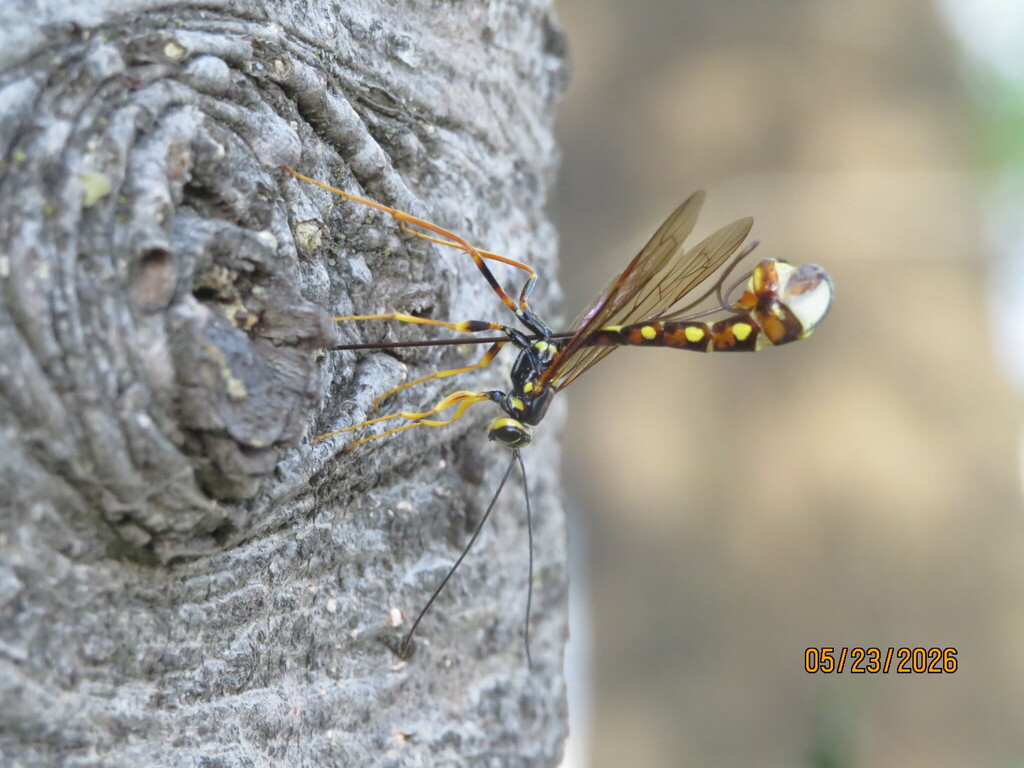
This evening I noticed a large ichneumonid wasp flitting about on a dead or dying spruce tree in the backyard. So I went in to get the camera, hoping it would still be around when I got back. And it was.
It looked like a giant ichneumonid wasp (genus Megarhyssa), which I've never seen before. And after taking some photos, it was clear that that was indeed what it was. Since there aren't many species of this genus in the western United States and the coloring is quite distinctive, I was able to identify it as the Western Giant Ichneumonid Wasp (Megarhyssa nortoni nortoni).
A half hour or so later, I returned to see if it had found a site to oviposit. And it had! I watched it as it coiled up it's long ovipositor into a bubble-like container at the end of its abdomen and then drilled vertically into the wood. And finally, after about 40 minutes it withdrew the ovipositor and flew away.
Giant Ichneumonid Wasps are host specific, so I'll see if I can find its hosts [White-Horned Horntail (Urocerus albicornis)] around the stump.
06 May 2026
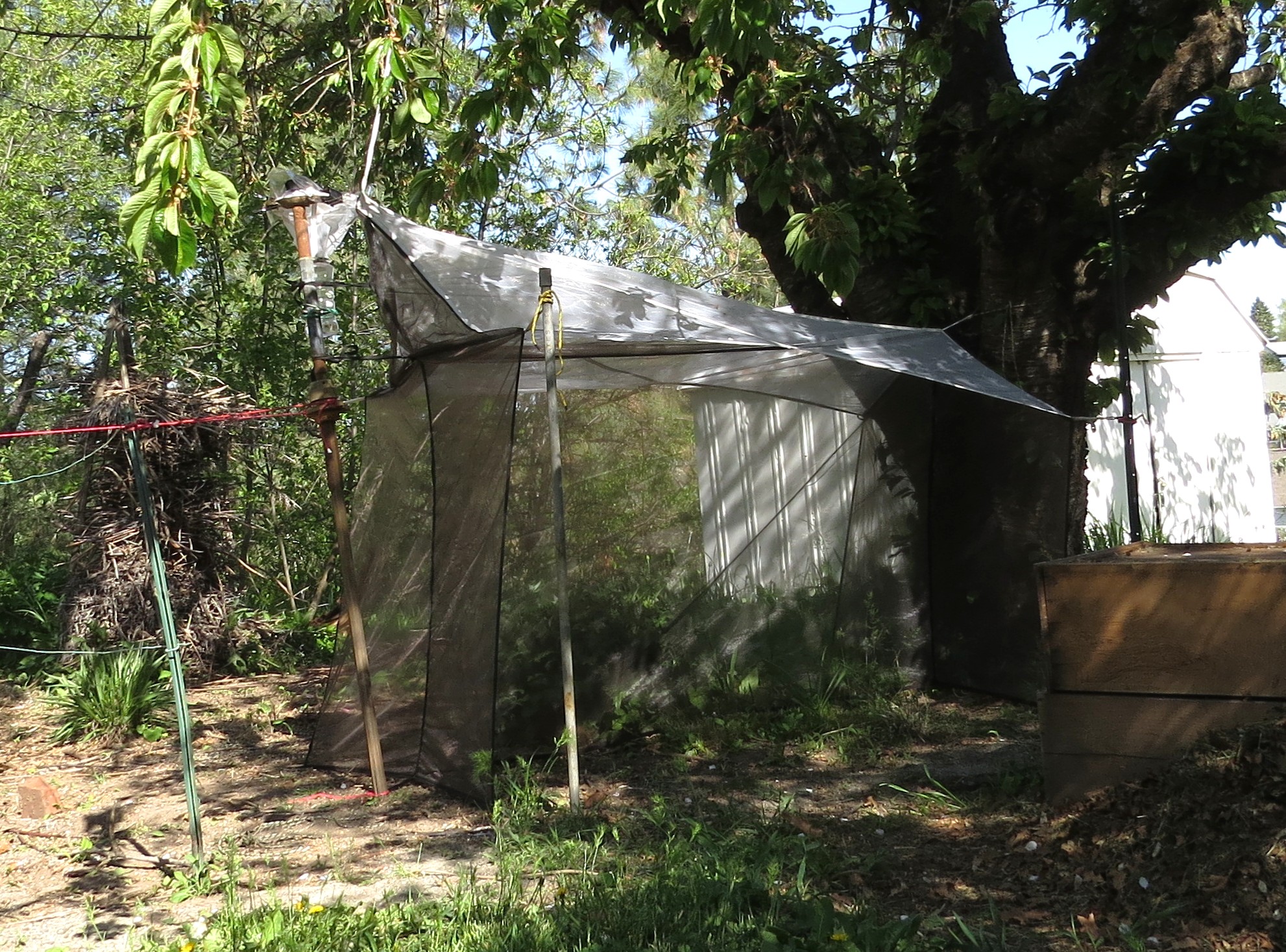
Removed container from the Malaise trap at 6 pm, about 48 hours after set up. Now it's time to see what it's caught. (This is going to take awhile!)
04 May 2026
Set up Malaise Trap at 6pm.
01 May 2026
I watched this cutworm wasp (Podalonia sp.) dig a nest for a half hour or so.
After completing the nest, she retrieved a cutworm that she had previously paralyzed and cached several cm above the ground on a plant stem 2.5 m from the burrow.
The wasp carried her prey to the nest in 5 minutes. This included climbing a 30 cm vertical concrete block wall. (See the photo below, which was taken during her climb up the wall.)
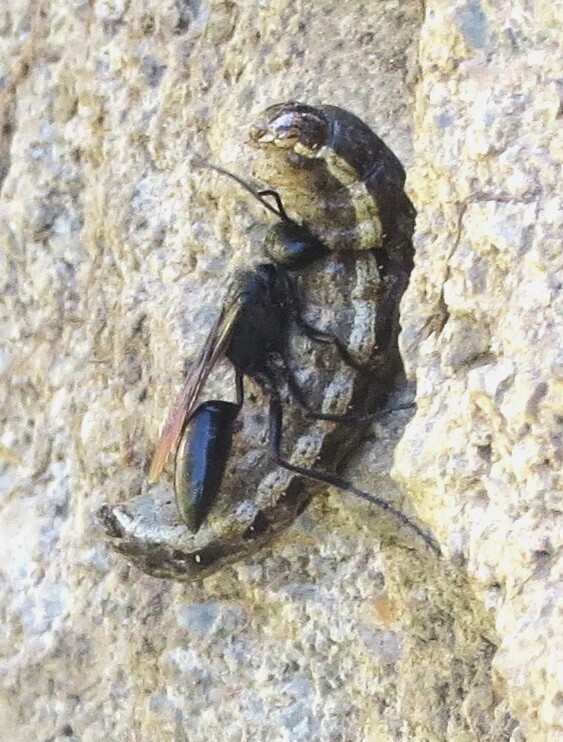
When she arrived at the nest, she left the prey next to the entrance, entered the burrow, turned around, and pulled the caterpillar into the nest with her mandibles.
She then closed and covered the nest, which took about 5 minutes.
After she finished, I dug the caterpillar up and placed it in a container. A single egg was placed on the left side of the second abdominal segment. The egg was 4.0 mm long and 0.9 mm wide.
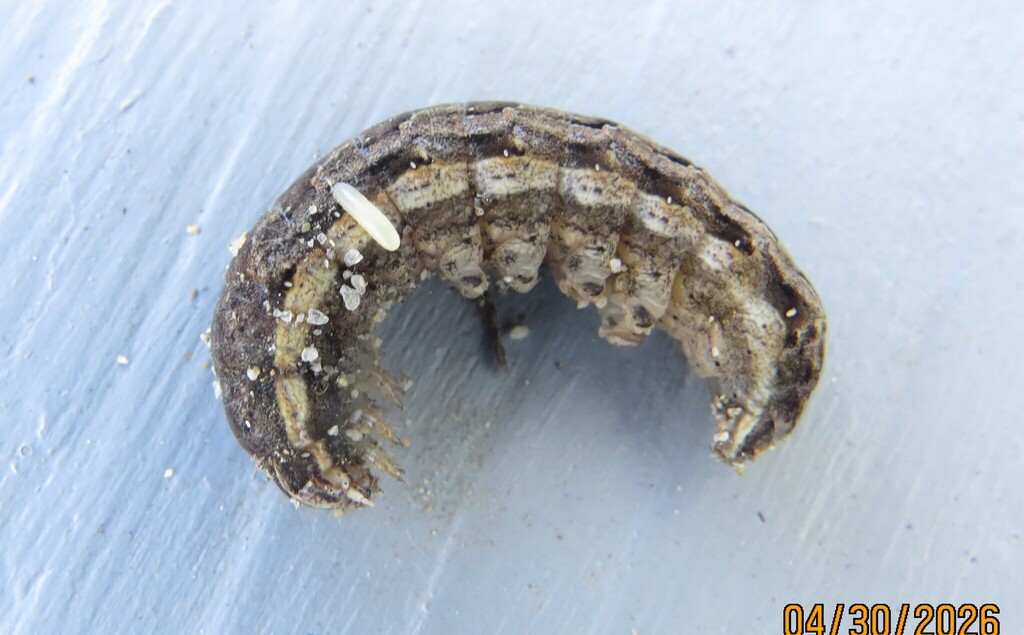
I'll watch to see if the egg hatches.
28 Apr 2026
On April 9, I found a piece of a log on the ground with what looked like a Tiger Swallowtail pupa on it. I put it in an aquarium to see what might emerge. When I looked today, I saw this:
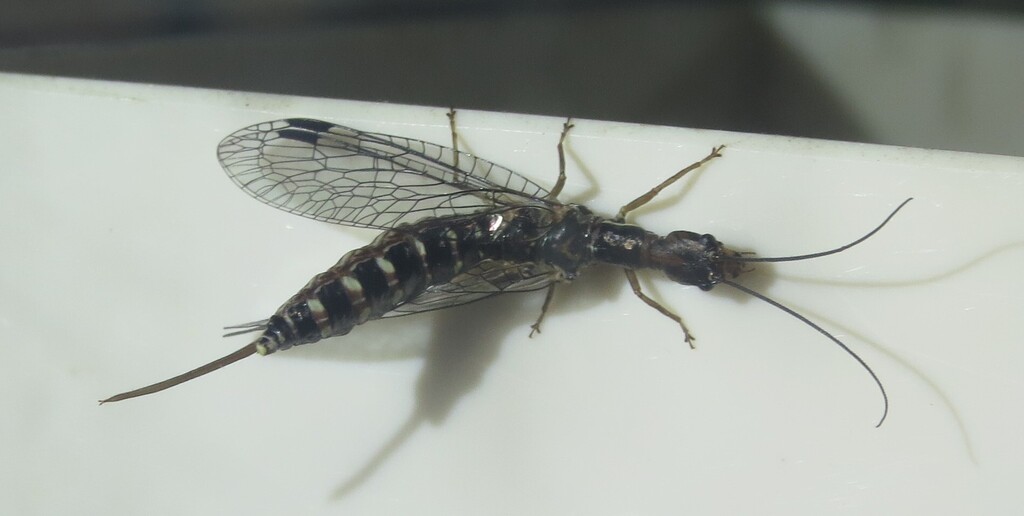
An American Square-headed Snakefly (Inocelliidae: Negha sp.) -- a new family and genus for the yard.
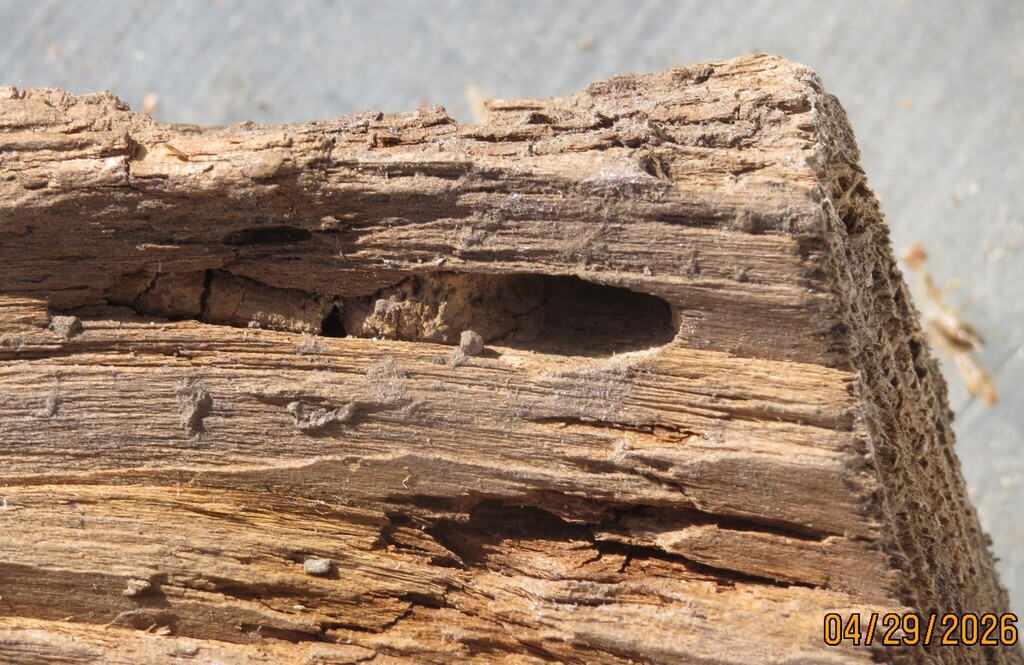
But the snakefly didn't emerge from the swallowtail pupa; it seems to have emerged from this:
07 Apr 2026
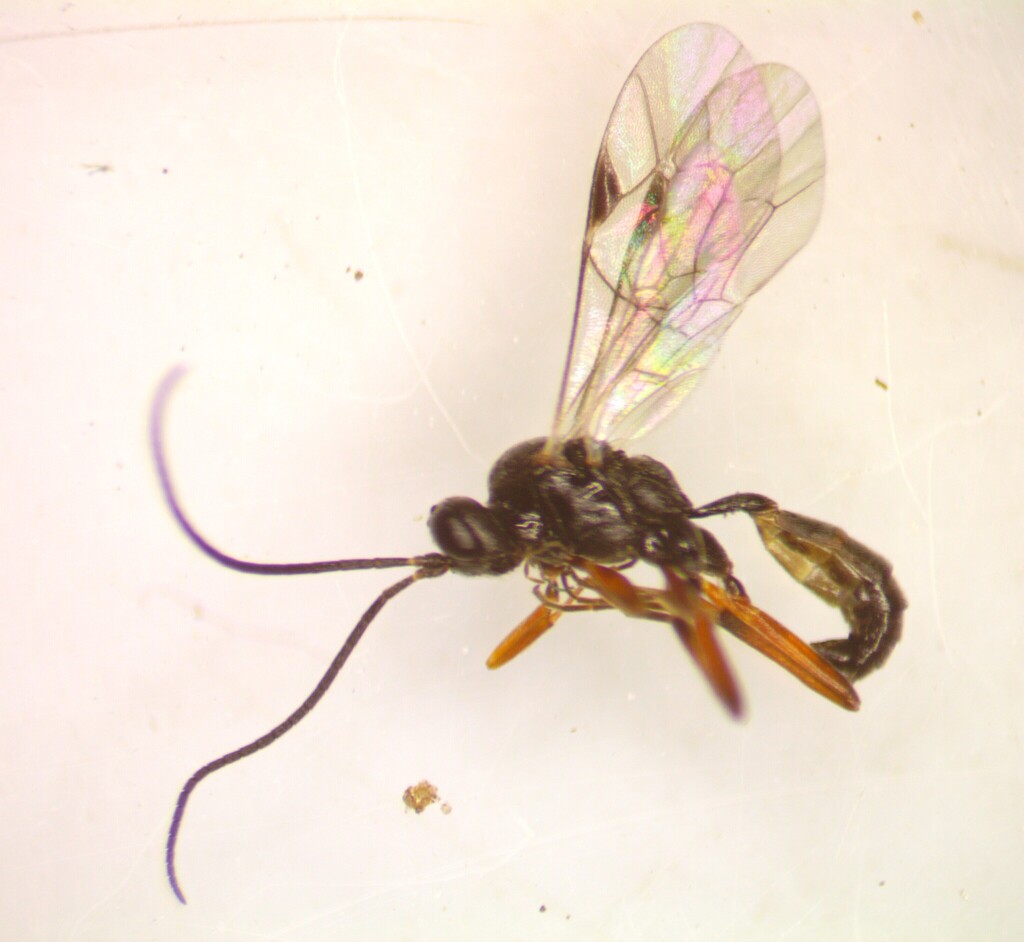
About a dozen of these Darwin Wasps (Ichneumonidae) emerged yesterday from spider egg sacs or mantid egg cases that I collected on March 17 from our front garden wall. (Length ~ 5mm)
Unfortunately, put all of the eggs in one container, so I can't be sure which eggs were parasitized - although I did see a hole in one of the mantid egg cases, from which the ichs may have emerged. I also saw a few spiderlings in the same container.
05 Apr 2026
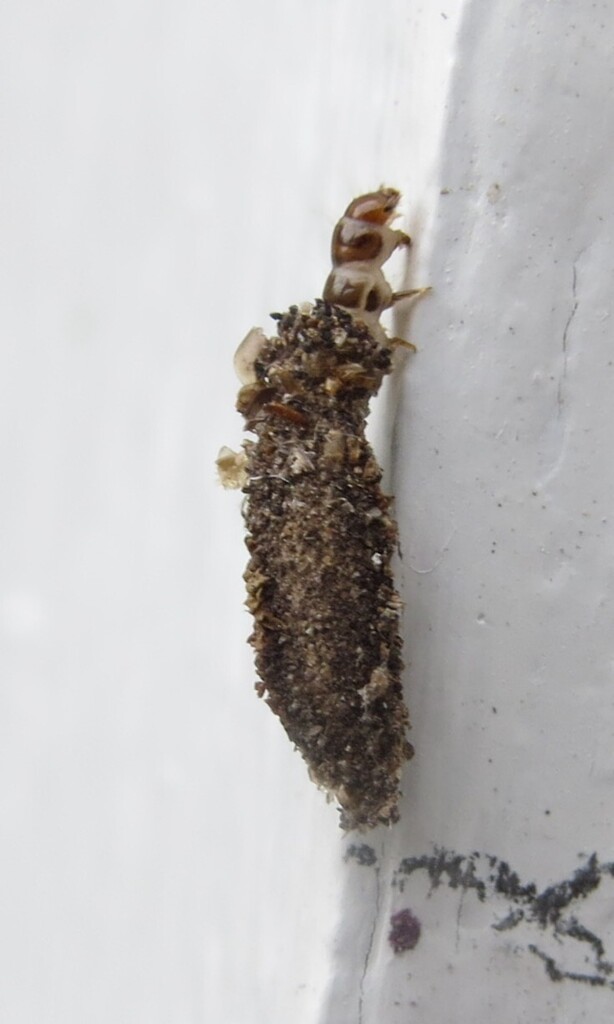
A bagworm larva (Dahlica sp.) was crawling up the wall on the front porch. It was about 10 mm long and traveled 6 cm in 8 minutes. (7.5 mm/minute)
27 Mar 2026
First bee in the yard this spring. Looks like a male blue orchard bee.
iNaturalist observation
Also saw a common digger bee (Anthophora sp.) a Lassioglossum, and a bumble bee (but couldn't get a photo).
03 Mar 2026
I observed the lunar eclipse early this morning between 3 and 4 am. I also measured its altitude with a quadrant as it crossed the meridian, which allowed me to plot the moon's position in the sky just before it crossed the ecliptic.
30 Jan 2026
I made some adjustments to the transit quadrant, which measures the altitude (angle above the horizon) of a celestial body as it crosses the meridian. Previously, I had V-shaped sites at the front and rear; now I've replaced them with circular sites with about 5 mm diameters. I also adjusted the attachment of the plumb line, which was turning a bit when tightened into position. Today's reading of the sun as it crossed the meridian produced good results. The altitude was within 0.1 degree and the time of crossing within 1 minute. This resulted in an estimate of position that had an error in Declination of 0.1 degree and a Right Ascension within 0.02 hours. (Not as good as Tycho Brahe's results, but better than Hipparchus's.)
23 Jan 2026
Many LQA observations are on GBIF (Global Biodiversity Information Facility) Here's a link
11 Jan 2026
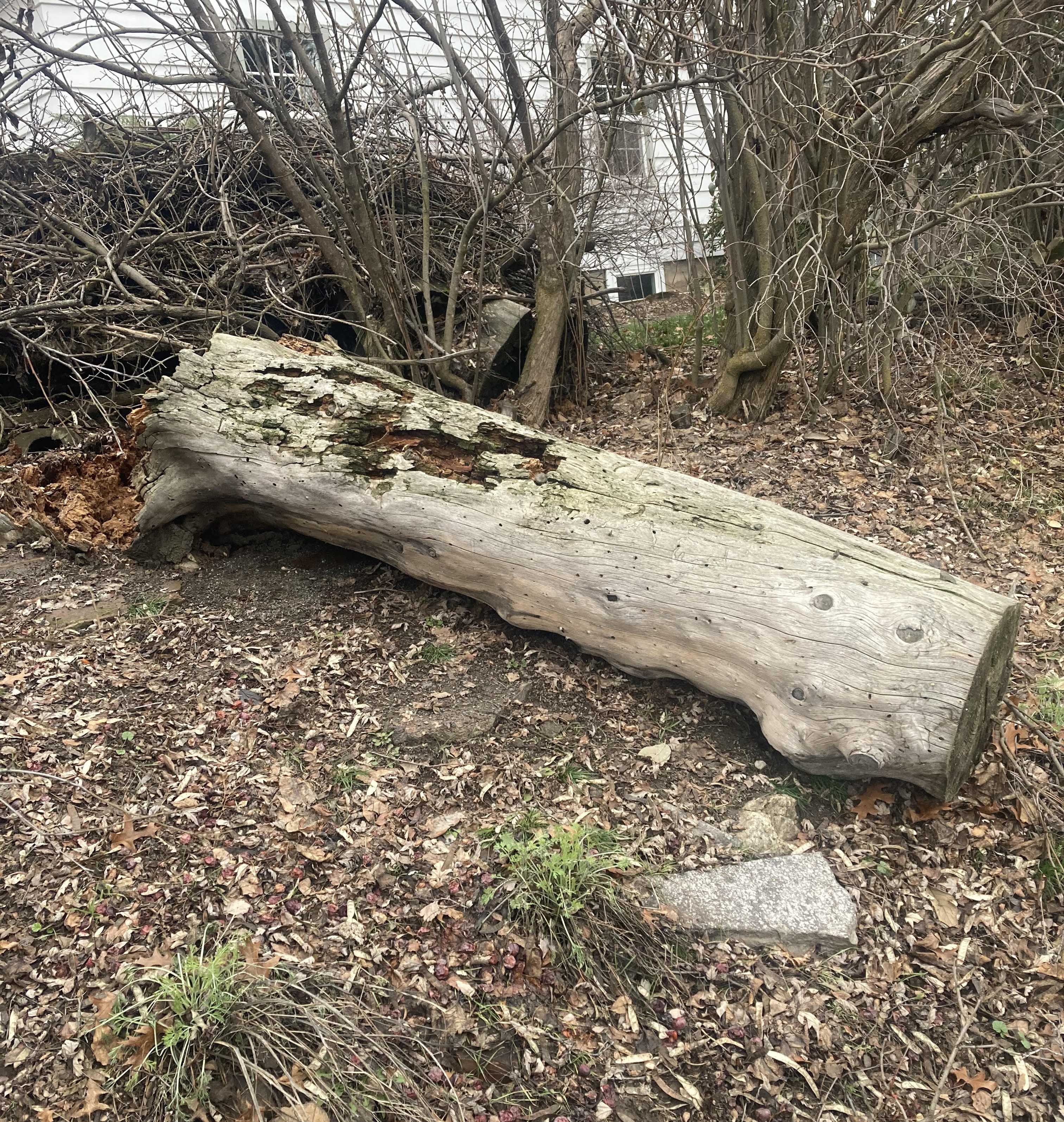
The old spruce stump fell over today. We had to remove the tree about 12 years ago, and decided to leave a stump for wildlife. It became the most interesting and active habitat in the yard for several years.
28 Dec 2025
Bright sunny day today. So I got an analemma. This put the sun at an RA of 18.53 and Declination 23.16° S.
Mean solar noon now occurs more than a minute before local solar noon.
28 Dec 2025
Observed the meridian passage of Spica this morning. The passage occurred at 6:44 at an altitude of 32.0° From this its right ascension and declination were calculated as 13.42 hours, -11.26°, which is very close to the Stellarium values of 13.42 hrs and -11.30°.
12 Dec 2025
It's been cloudy here for the last week or so, but I was finally able to get an analemma marked and measured today. The sun's declination is now more than 23 degrees south. I hope there'll be enough sun for a reading on the solstice!
09 Dec 2025
On Saturday I began to disperse Palouse Prairie wildflower seeds on the south side of our lot. And today I finished spreading the last of the seeds around the northeast apple tree. It's been warm and rainy for this time of year, so I thought I'd scatter the seeds before the winter snows set in.
06 Dec 2025
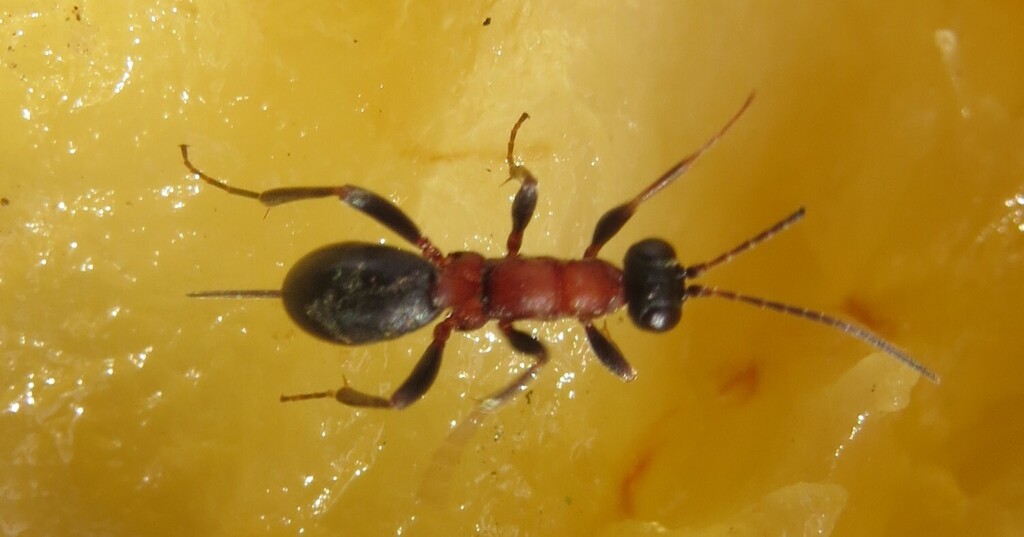
While I was picking up apples that had fallen from the tree, I found a tiny (5 mm) Ichneumon wasp on one of the rotting apples. This is a wingless female, likely in the genus Gelis. I don't know what she was doing on a rotting apple in December, but she was probably looking for something to parasitize. All Ichneumons are parasitoids, depositing their eggs in the eggs or larvae of insects or spiders. I've previously seen Gelis emerge from spider egg sacs from the yard.
06 Dec 2025
I began to identify and document everything I could find on our little lot in 2016, but I didn't have a way to comment on things on a day-to-day basis. So I thought I'd start doing that now.