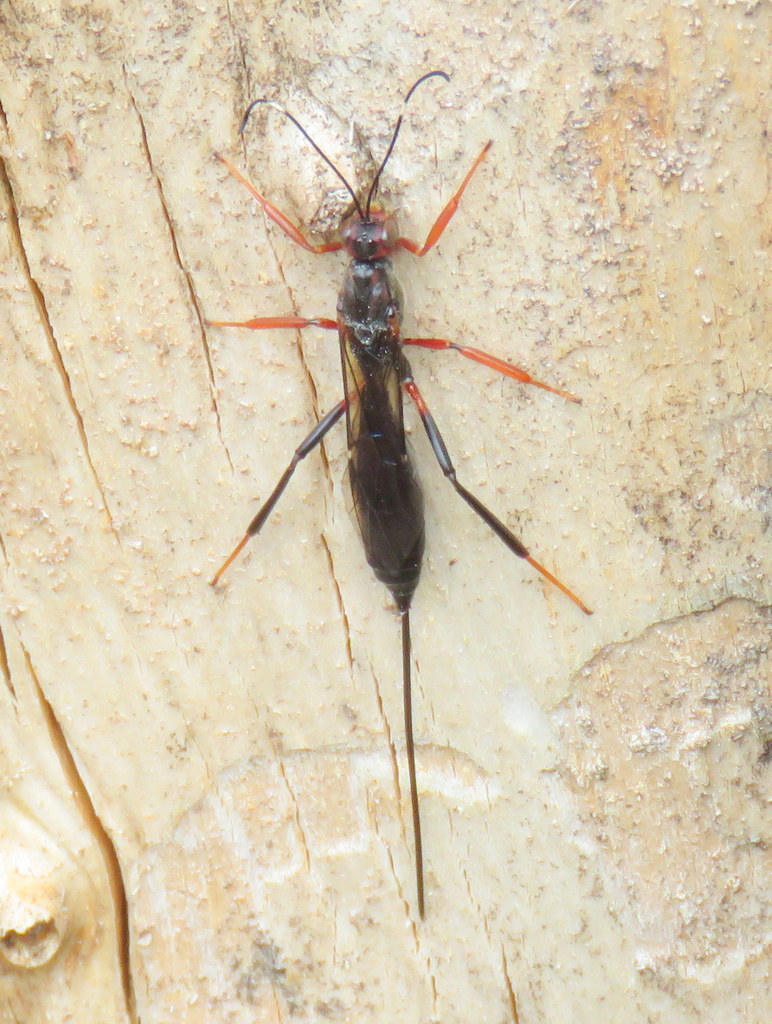
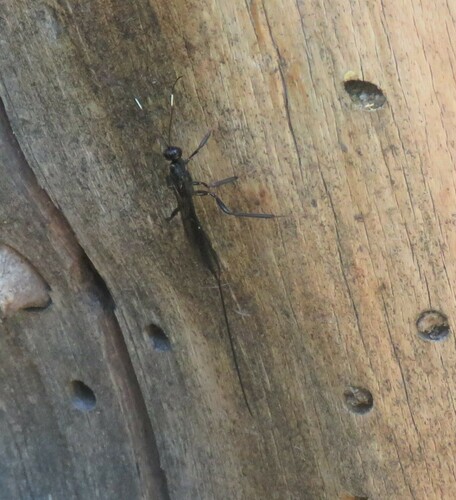
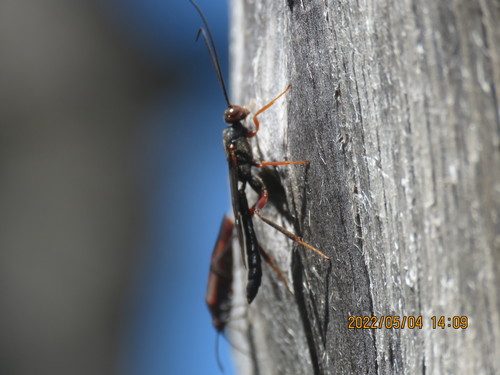
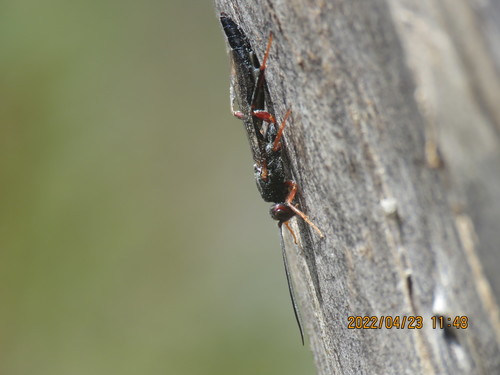
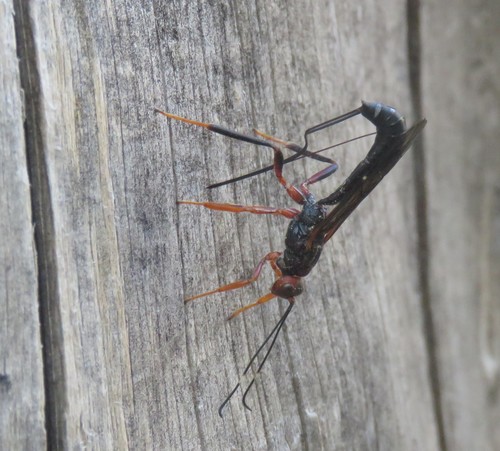
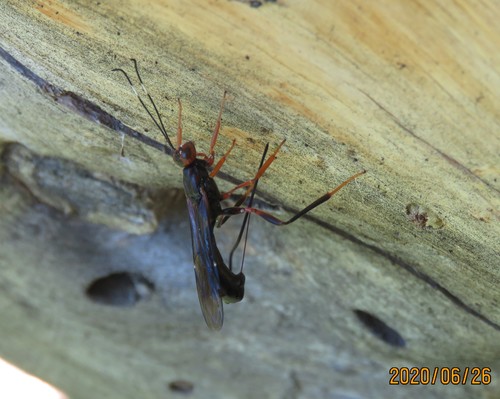
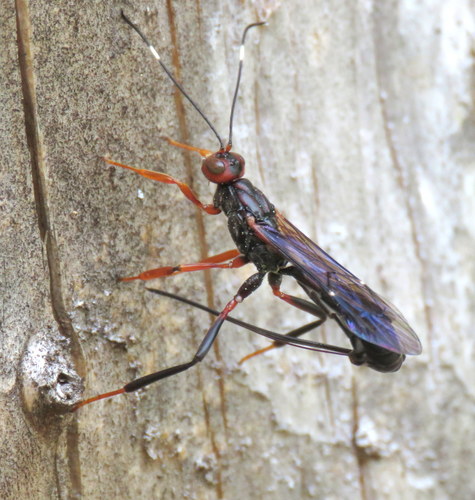
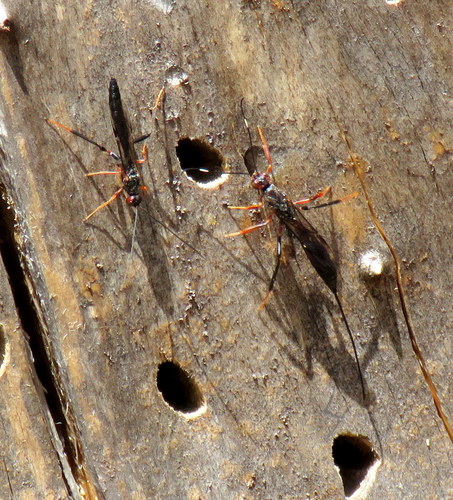
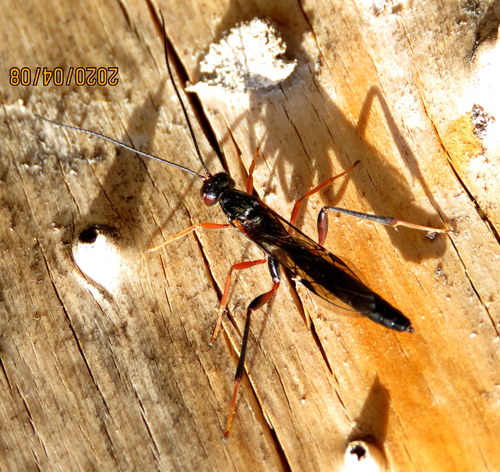
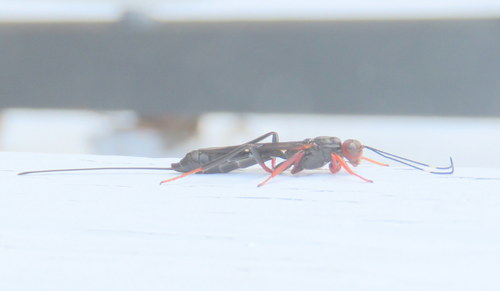
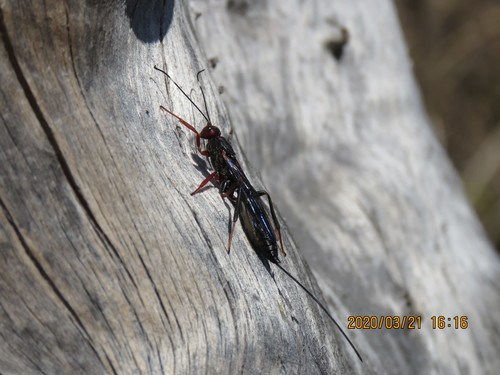
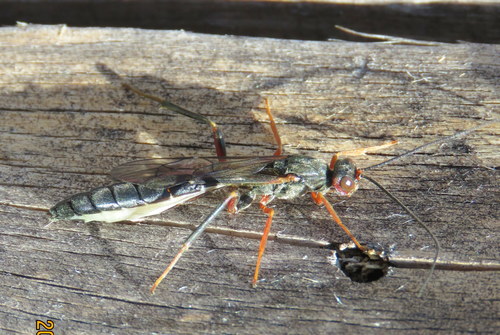
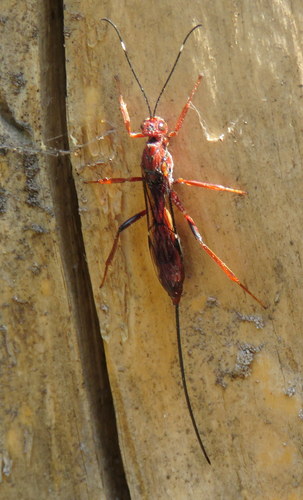
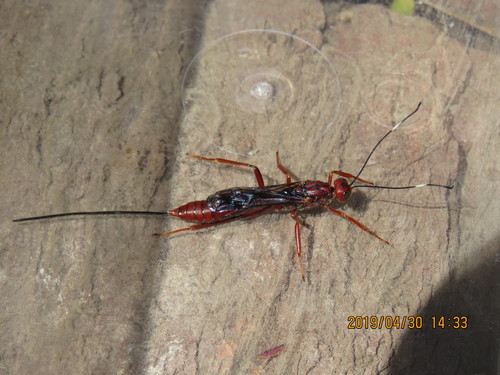
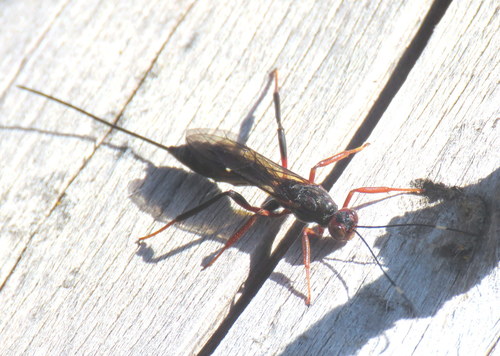
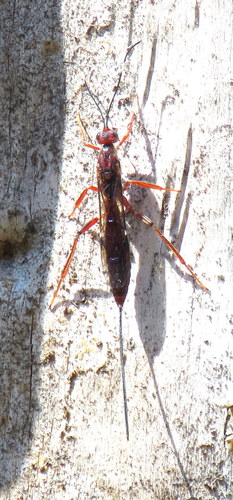
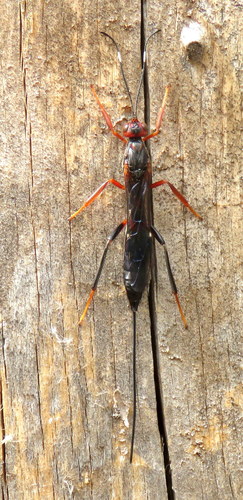
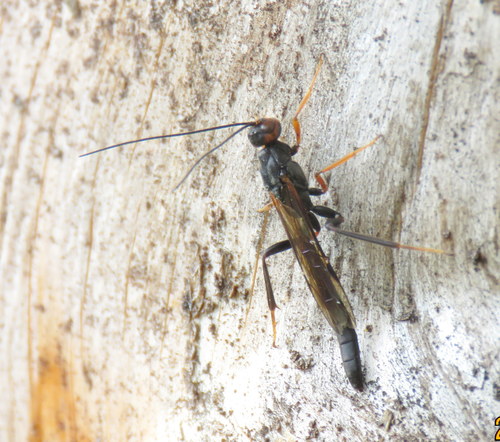
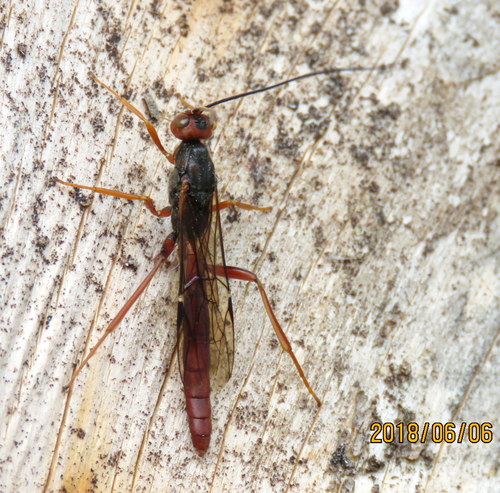
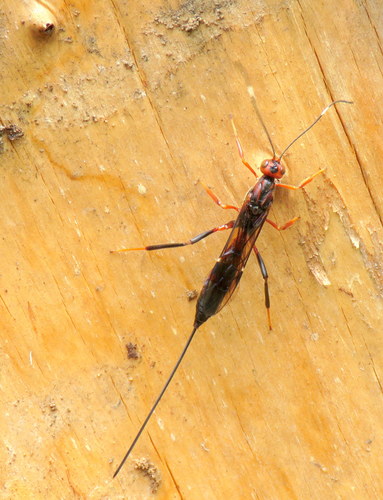
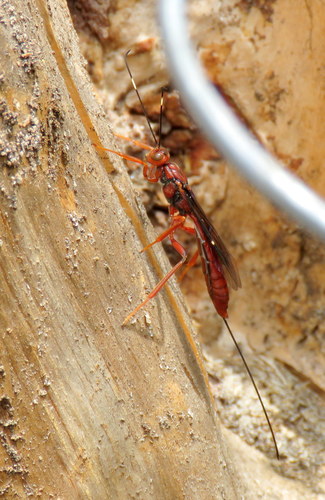
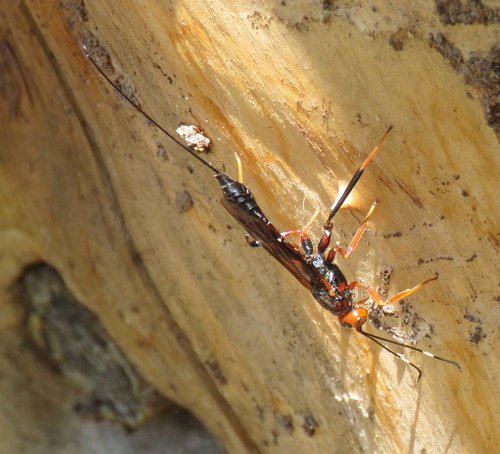
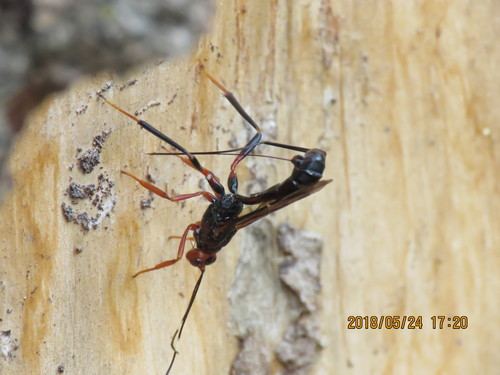
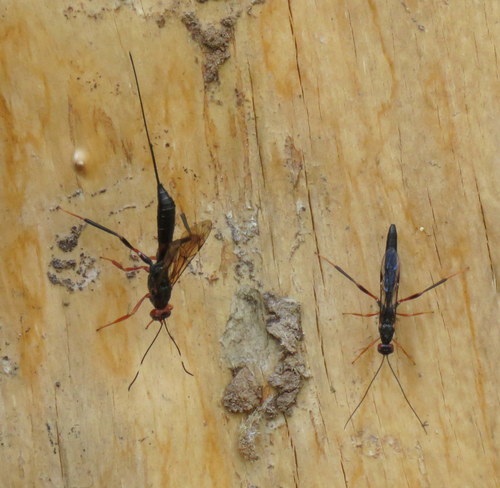
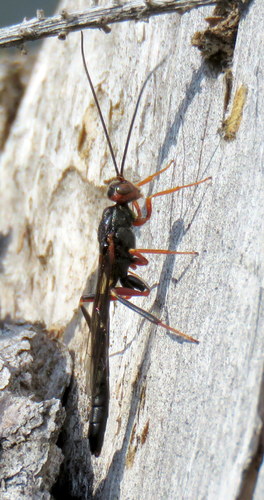
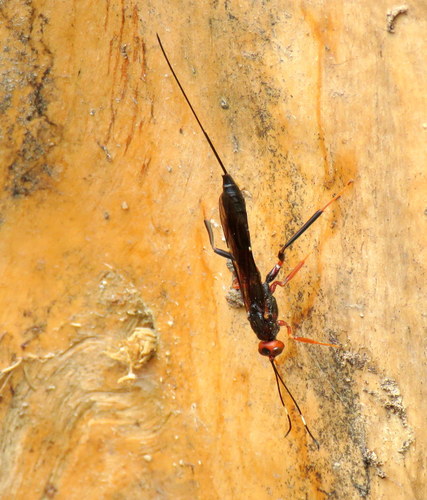
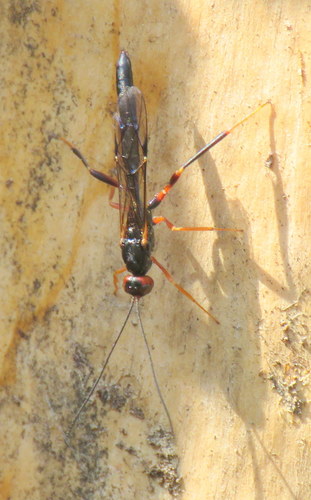
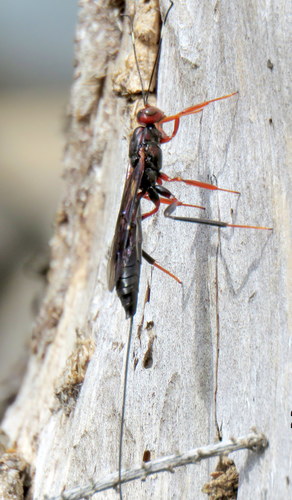
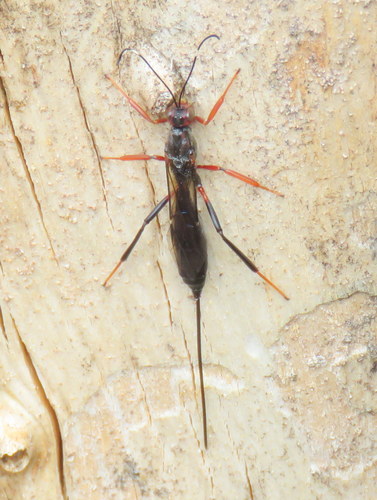
Xorides wasps are parasitoids of wood-boring beetles. I saw the first one in the yard on May 1, 2018. It was on an old spruce stump, which we left when we had to remove a tree that was in danger of falling about five years before.
The female has a long ovipositor, which is about as long as her body. She searches for beetle larvae by flicking her antennae using echolocation. When she finds a host, she inserts her ovipositor through the hard wood and deposits an egg. The process takes about a half hour or so.
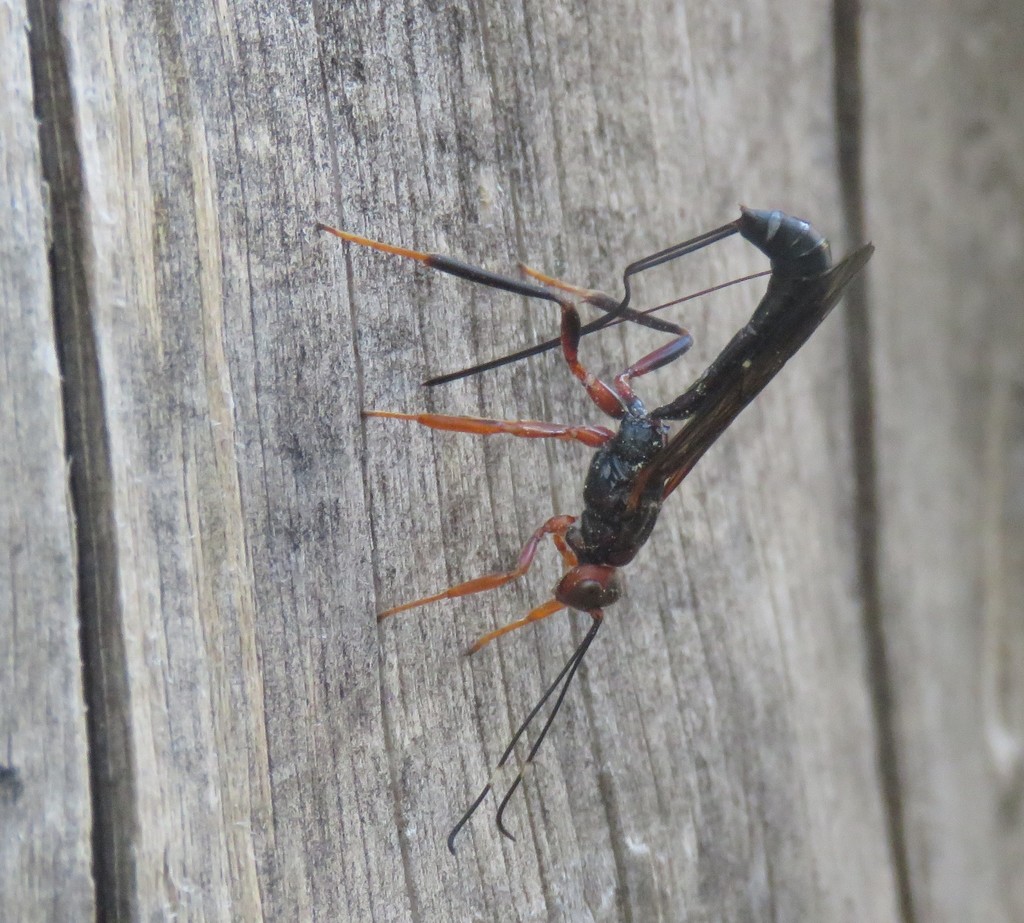
Xorides wasps have continued to visit and oviposit on the stump each spring since then. But they are much less frequent now. I suspect that the stump has aged enough to no longer be a good habitat for their beetle larva hosts.
But they have provided lots of entertainment since then. I have 29 iNaturalist observations from the stump - which is makes LQA the leader for Xorides worldwide.
Xorides californicus
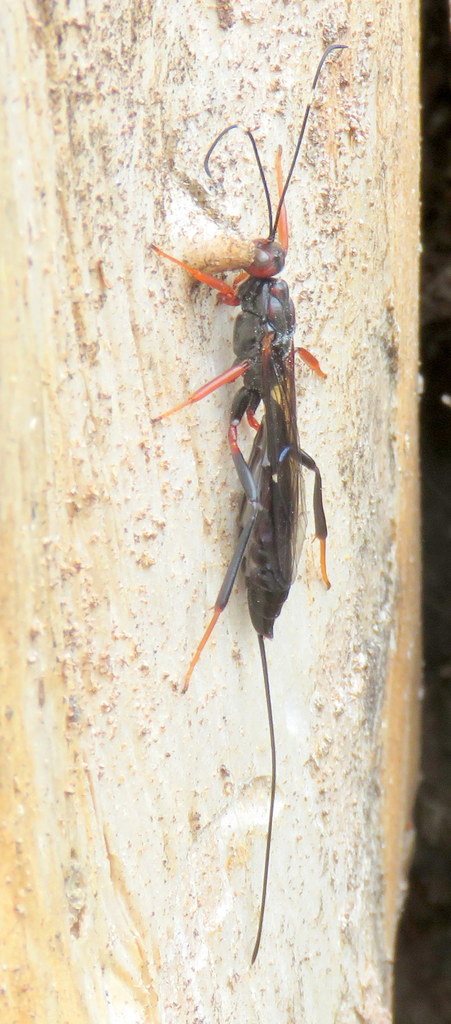
Male Xorides with a box elder bug in the background.
Xorides sp.
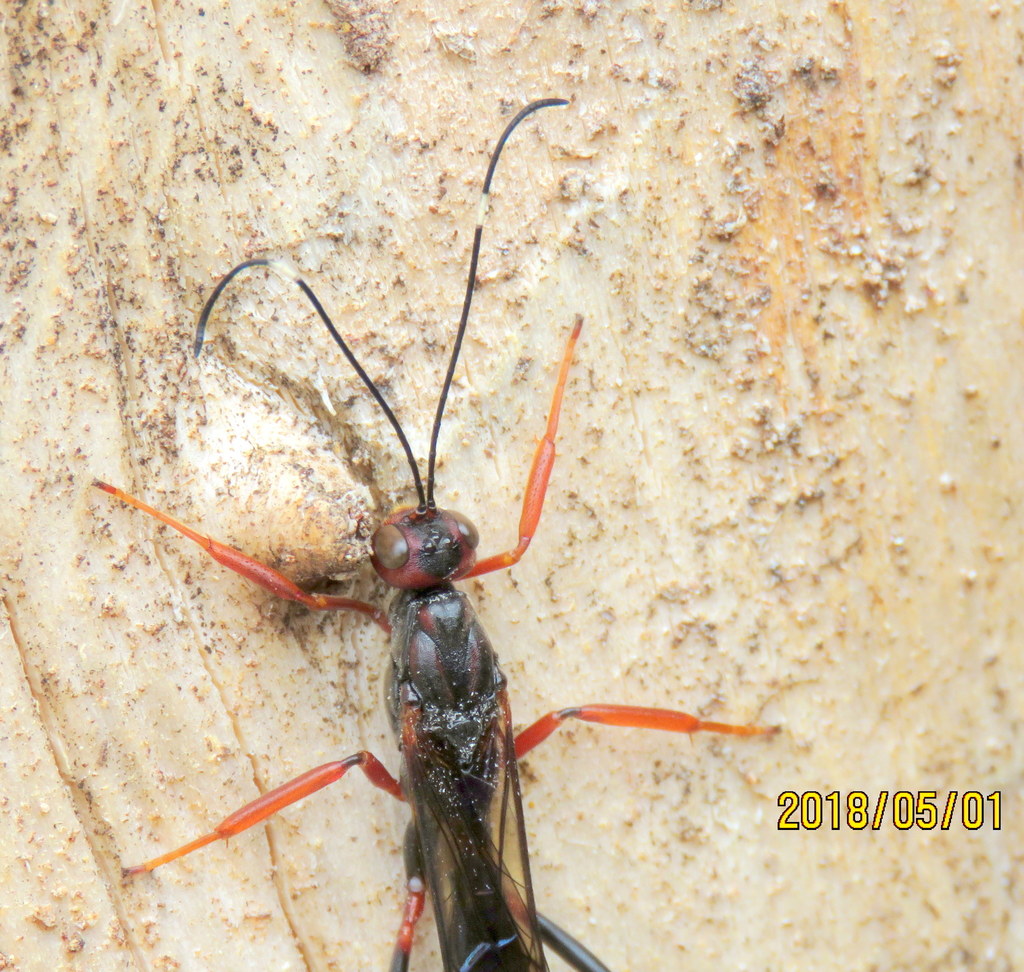
Ovipositing on spruce stump
Xorides californicus
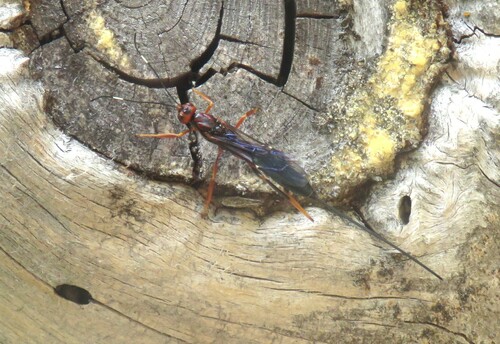
Ovipositing in a spruce stump
Xorides sp.
On spruce stump. 25 mm. 11 deg C.
Xorides sp.
Spruce stump, 7 deg C
body length 25 mm
Xorides sp.
This is the larger of the two female species (?) that were on the spruce stump today. This one has a black abdomen and black legs; the other two individuals were smaller with mostly red abdomens and hind legs.
Xorides sp.
Female ovipositing in a spruce stump. The whole process took about 90 minutes.
Xorides sp.
male (right) and female (left) -- the same ones as in the previous two observations
Xorides sp.
Male hanging out near ovipositing female
Xorides sp.
Large body and long ovipositor, each about 4 cm.
Xorides sp.
Body length ~ 25 mm
g_idstdClass Object
(
[id] => 41
[family_id] => 9
[genus_name] => Xorides
[common_name] =>
[genus_text] =>
Xorides wasps are parasitoids of wood-boring beetles. I saw the first one in the yard on May 1, 2018. It was on an old spruce stump, which we left when we had to remove a tree that was in danger of falling about five years before.
The female has a long ovipositor, which is about as long as her body. She searches for beetle larvae by flicking her antennae using echolocation. When she finds a host, she inserts her ovipositor through the hard wood and deposits an egg. The process takes about a half hour or so.
Xorides wasps have continued to visit and oviposit on the stump each spring since then. But they are much less frequent now. I suspect that the stump has aged enough to no longer be a good habitat for their beetle larva hosts.
But they have provided lots of entertainment since then. I have 29 iNaturalist observations from the stump - which is makes LQA the leader for Xorides worldwide.
)
stdClass Object
(
    [id] => 551
    [k_id] => 1
    [p_id] => 2
    [sp_id] => 1
    [c_id] => 7
    [sc_id] => 1
    [o_id] => 8
    [so_id] => 1
    [io_id] => 0
    [supf_id] => 3
    [f_id] => 9
    [sf_id] => 21
    [t_id] => 0
    [st_id] => 0
    [g_id] => 41
    [sg_id] => 0
    [s_id] => 24
    [ss_id] => 0
    [o_desc] =>
    [o_time] => 1528298640
    [inat_time] => 1528298640
    [cat_id] => 58
    [o_image] =>
    [o_featured] => 0
    [inat_url] => https://www.inaturalist.org/observations/13205968
    [inat_image_url] => https://inaturalist-open-data.s3.amazonaws.com/photos/19308710/medium.jpeg
    [o_short_desc] =>
    [lowest_level] => s_id
    [llid] => 1
    [cultivated] => 0
    [introduced] => 0
    [good_image] => 1
    [pollinating] => 0
    [pollinating_level] =>
    [eco_interaction] => 0
    [gender] =>
    [research_grade] => 0
    [beeatlas] =>
    [admin_notes] => Updated from iNat
    [gbif_url] =>
    [collection] =>
    [collection_method] => 0
    [num_individuals] => 1
)
Xorides californicus
Taxonomy
Subclass:
Pterygota (Winged and Once-winged Insects)
Suborder:
Apocrita (Narrow-waisted Wasps, Ants, and Bees)
------------------------------------------------------